Why light is everything in photography
If photography is the art of noticing, then one of the first — and probably the most important — things to notice is light.
Before I notice the location, the colours, what everyone is wearing or even what your children are up to, I’m noticing the light. Where it’s coming from, how soft or strong it is, what it’s doing to the space around us and, most importantly, how it’s falling on you.
Because light can completely change the feeling of a photograph.
It can be bright and joyful, soft and hazy, deep and atmospheric, warm and nostalgic. It can draw your eye towards a tiny moment between two people, or turn an otherwise ordinary corner of your home into somewhere that feels a little bit magical.
And this is why, if I suggest a particular time of day for your family, motherhood or maternity photography session, there is usually method behind the madness.
I promise I’m not trying to get you out of bed at an unholy hour, or deliberately push your family towards bedtime. I’m trying to get the very best from the light.
Chasing the light
If you’ve ever wondered why photographers get so excited about golden hour, this is why.
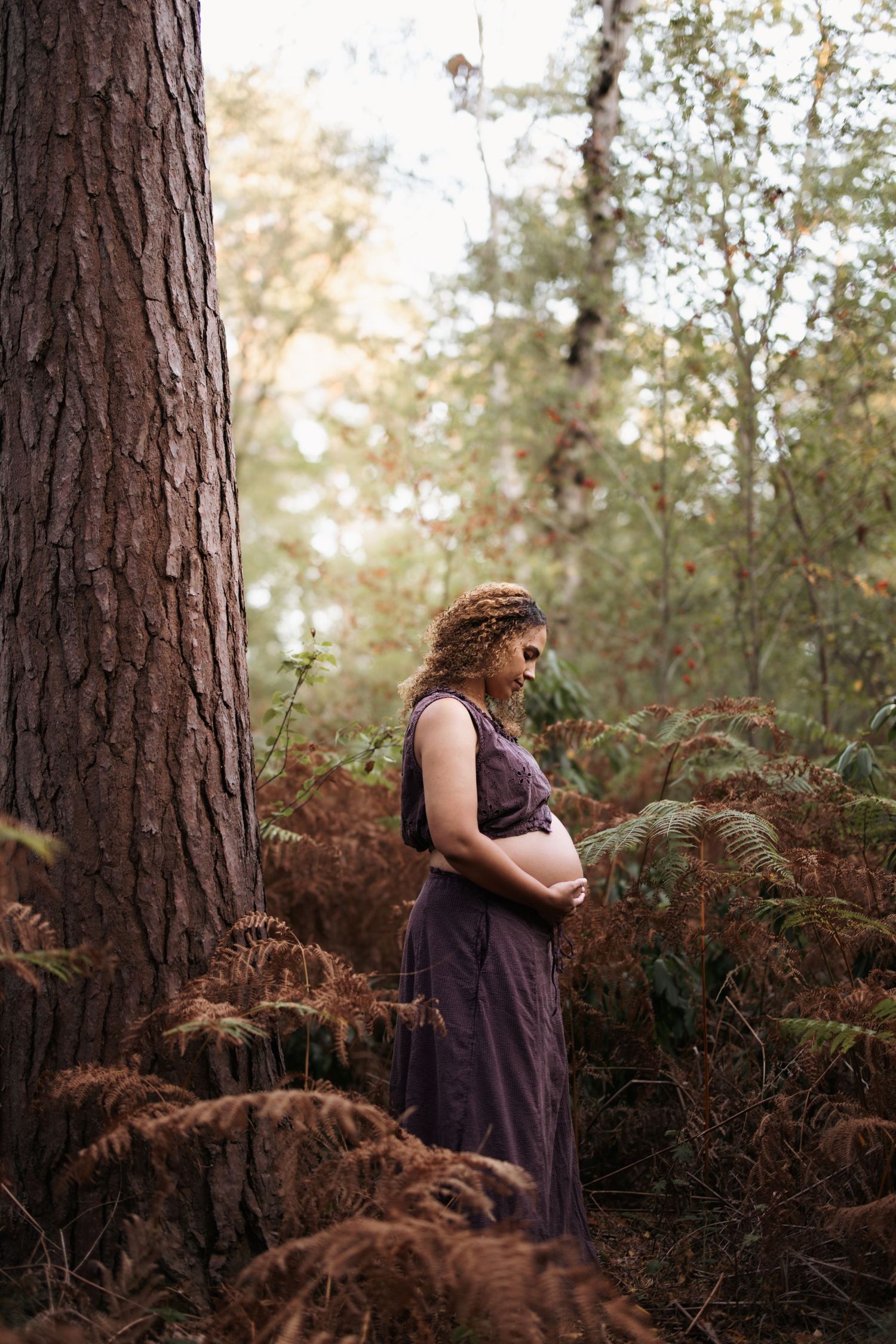
When the sun is low in the sky, the light becomes softer and warmer. It skims rather than blasts. It catches in hair, filters through trees and creates little pockets of glow and shadow.
It can turn a simple woodland walk into something that feels almost cinematic.
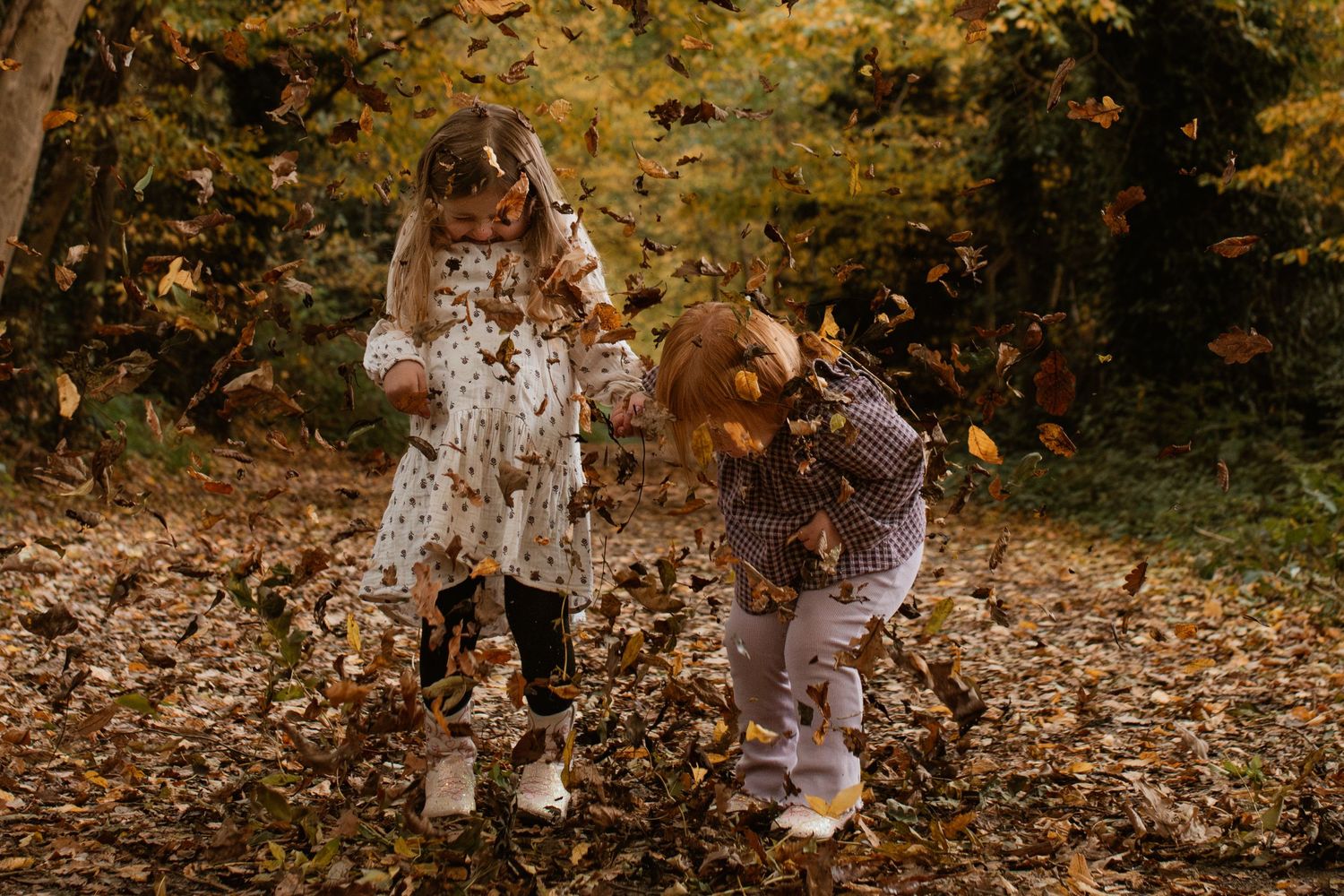
This is something I’m constantly looking for during outdoor family photography sessions in Hertfordshire. I might walk straight past a perfectly lovely clearing because the light isn’t doing anything particularly interesting there, only to stop a few minutes later because the sun has found its way through the trees in just the right place.
You might think we’re simply going for a walk.
I’m quietly stalking the light.
And yes, I will probably be obsessively checking the exact time of sunrise and sunset beforehand.
Living in the UK, we’re rather blessed with ever-changing light. The length of our days changes dramatically throughout the year, as does the position of the sun in the sky. It means that the same location can look completely different from one month to the next — sometimes even from one hour to the next.
For a photographer, that’s pretty exciting.
Light changes with the seasons
The quality of natural light changes enormously as the seasons move on, which means the “best” time for a photography session isn’t necessarily the same in June as it is in December.
In the height of summer, when the sun is high and strong, that bright midday light can be incredibly tricky to work with. It creates hard shadows, squinting faces and that rather unforgiving overhead light that isn’t particularly helpful when you’re trying to photograph a family who would quite like to keep their eyes open.
So during the summer months, many of my outdoor sessions naturally fall towards either end of the day, when the sun is lower and the light becomes softer, warmer and more directional.
As autumn arrives and winter draws closer, things begin to change. Because of the tilt of the Earth in relation to the sun, the sun sits lower in the sky here in the UK. The daylight becomes less harsh, and we have a much bigger window during the middle of the day where the light can be beautiful to work with.
It’s one of the reasons I love photographing families throughout the year.
The same woodland can look completely different depending on the season, the weather, the time of day — and, of course, what the light is doing.
So if I suggest a particular time for your shoot, it isn’t an arbitrary photographer rule that I’ve decided everyone must follow.
I’m simply looking at the season, the location and the light, and trying to put us in the best possible place to make the most of all three.
Sometimes that means an early start.
Sometimes it means a bedtime session.
And sometimes, wonderfully, it means we can meet at 11am and still have beautiful light to play with.
And then there are the clouds...
Here’s something I’ll happily say as a photographer:
Please don’t panic if your outdoor family photoshoot is forecast to be cloudy.
Overcast skies can be an absolute gift.
There’s a reason photographers have historically referred to an overcast sky as “God’s softbox”. It really is exactly that.
Cloud acts like a giant diffuser, spreading the sunlight more evenly and softening those hard shadows. The result is flattering, beautiful light without everyone having to squint into the sun.
But it also does something else that I particularly love.
It creates atmosphere.
An overcast woodland can feel quiet, moody and cinematic. Colours become richer and more subtle. Greens deepen, skin tones remain soft and the whole image can take on a wonderfully atmospheric quality.
So while a perfect blue sky might sound like the ideal weather for your family photography session, I’m often secretly rather pleased when the forecast promises a little cloud.
The weather doesn’t have to be perfect.
The light just needs to be interesting.
Finding beautiful light at home
Of course, beautiful light isn’t exclusive to outdoor photography or golden hour.
Some of my favourite light can be found at home.
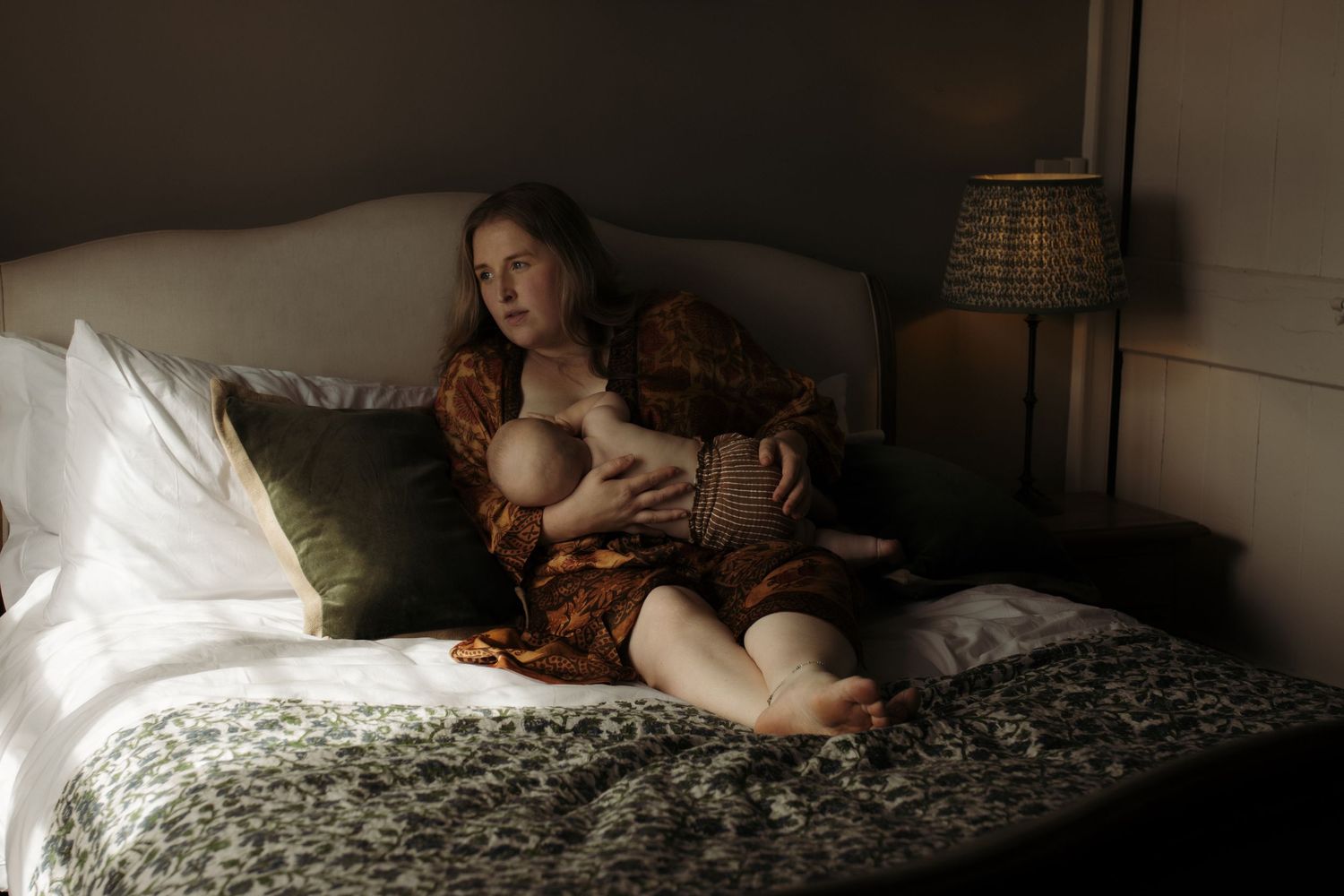
When I’m photographing a relaxed at-home family or motherhood session, I’m often looking for tiny pockets of natural light. A window catching the afternoon sun. A strip of light falling across the floor. The soft glow around a doorway.
These little pockets can transform an ordinary photograph.
A baby curled up on a bed becomes something much more atmospheric when the light falls softly across their face. A mother cuddling her children on the sofa can suddenly feel like a photograph from a family album you’ll treasure for years.
I’m not necessarily looking for a beautiful room.
I’m looking for beautiful light within the room.
And sometimes the most unassuming corners of a house have the most wonderful light.
This is one of the reasons I love offering both outdoor and at-home family photography in Hertfordshire. They give us completely different ways of working with light, and both can tell a beautiful story.
Light, connection and the moments in between
Ultimately, though, light is only one part of the photograph.
Beautiful light can’t create connection where there isn’t any.
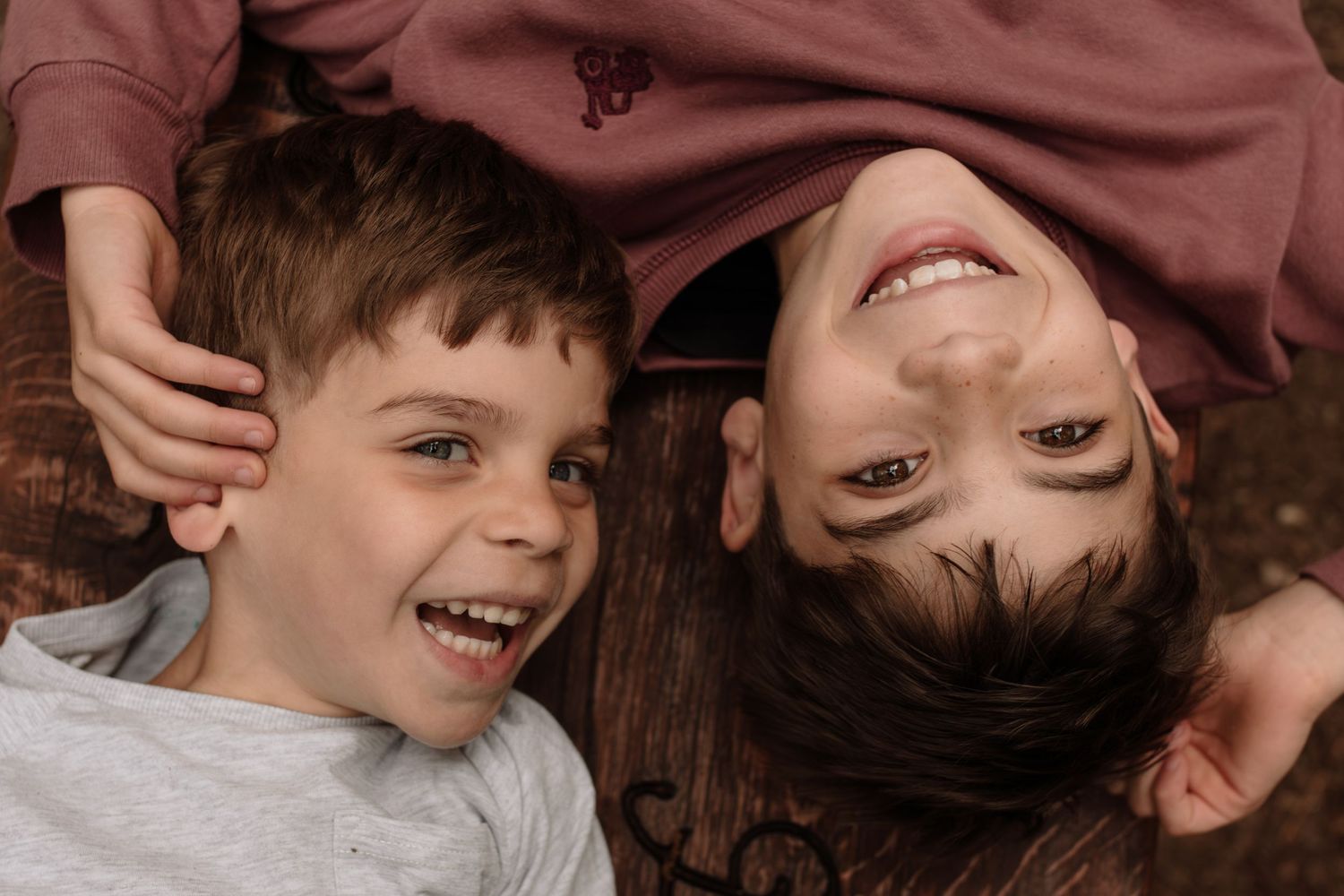
What I’m really looking for is the way the light interacts with you — the way your daughter reaches for your hand, the way your baby curls into your chest, the way your children run ahead of you down a woodland path, or the way you look at each other when you’ve momentarily forgotten there’s a camera there.
That’s where the magic happens.
The light simply helps me see it.
And perhaps that’s why I’m so drawn to natural, documentary-style family photography. It doesn’t need to be manufactured or complicated. I can work with what is already there — watching, noticing and waiting for those little moments when everything comes together.
Because sometimes the difference between an ordinary photograph and one that makes you stop for a moment is nothing more than a patch of sunlight falling in exactly the right place.
Or a cloudy sky.
Or the last little bit of evening light filtering through the trees.
Or a shaft of sunshine landing across your kitchen floor while your children are doing something completely ordinary.
And those are the moments I’m always looking for and the light that allows them to take centre stage in your photographs and ultimately your memories.
Viv x